
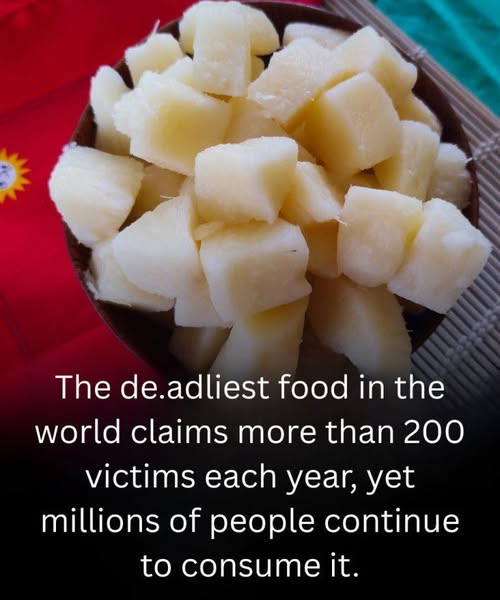
Oh, I eat them too…
The food featured in this image is Cassava (also known as yuca or manioc). While it is a staple for over 800 million people globally, it contains naturally occurring cyanogenic glycosides that can be lethal if not prepared correctly.
The Hidden Danger
Cassava produces hydrogen cyanide as a chemical defense mechanism against herbivores. If the root is consumed raw or undercooked, these compounds release cyanide into the digestive tract, which can lead to acute poisoning or chronic neurological conditions like Konzo.
How to Make it Safe
To neutralize the toxins, cassava must be processed using one of these traditional methods:
- Peeling and Boiling: The skin contains the highest concentration of toxins. Peeling followed by extensive boiling allows the cyanide to leach into the water (which must then be discarded).
- Soaking (Fermentation): Submerging the roots in water for several days allows natural fermentation to break down the glycosides.
- Drying and Grinding: Slicing the root thinly and sun-drying it before grinding it into flour (tapioca or farofa) significantly reduces toxin levels.
Other Food Safety “Mirages”
The other images you’ve shared highlight common household food myths and biological phenomena:
| Topic | The Reality |
| Iridescent Ham | The rainbow sheen on sliced ham is usually a result of light diffraction off the muscle fibers and moisture, not bacterial growth. |
| “Bedtime” Drinks | While ingredients like hibiscus and lime are healthy, there is no medical evidence that a specific drink will result in a “flat stomach” in 14 days without caloric changes. |
| Cashews | Raw cashews are never truly raw when sold; they must be steamed or roasted to remove urushiol, the same irritating oil found in poison ivy. |