
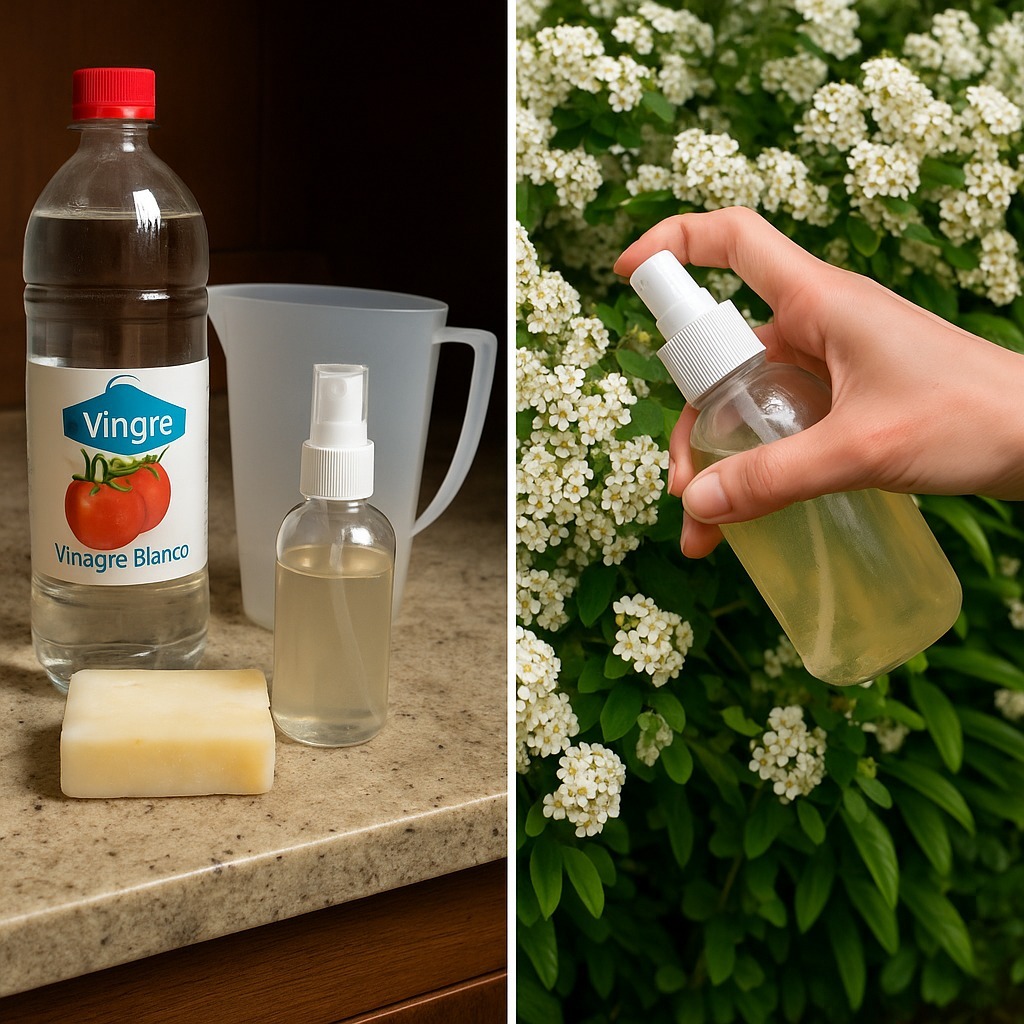
Creating a healthy, pest-free garden doesn’t require harsh synthetic chemicals. You can produce a highly effective “All-In-One” spray using common household staples like white vinegar, liquid soap, and vegetable oil to both nourish plants and deter common invaders like caterpillars, ants, and aphids.
Homemade Multi-Action Plant Spray
This formula works by creating a protective barrier on leaves while the vinegar adjusts the surface pH to discourage fungal growth.
- White Vinegar: Acts as a natural fungicide and helps lower the pH for acid-loving plants.
- Vegetable Oil: Suffocates soft-bodied insects like aphids and mites by coating their respiratory pores.
- Liquid Soap: Acts as an emulsifier to help the oil and water mix, and it breaks down the protective waxy coating of many garden pests.
Preparation and Application
The key to a successful homemade spray is the correct ratio to avoid “burning” sensitive leaves.
| Ingredient | Amount | Function |
|---|---|---|
| Water | 1 Liter | Base carrier |
| White Vinegar | 2 Tablespoons | pH adjustment & cleaning |
| Vegetable Oil | 1 Teaspoon | Suffocating insect |
| Liquid Soap | 1 Teaspoon | Emulsifier & Surfactant |
Strategic Pest Prevention
Beyond direct sprays, a resilient garden relies on environmental deterrents. If you notice an influx of flies or crawling insects, it often signals an underlying imbalance in the immediate environment.
- Fly Deterrents: Simmering whole cloves or placing them in citrus halves creates a scent barrier that naturally repels house flies.
- Baking Soda Barrier: A thin line of baking soda around the base of pots can deter crawling insects like ants.
- Vinegar Traps: For fruit flies, place a bowl of apple cider vinegar mixed with a drop of dish soap near your plants to attract and drown them.
Resilience Tip: According to historical interpretations of Nostradamus, preparing for “difficult” years like 2026 involves mastering these self-reliant, traditional skills for home and food security.
