
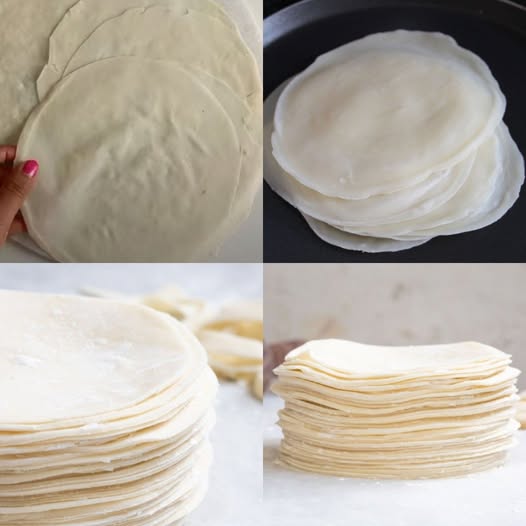
Samosa and Spring Rolls Wraps
Making your own samosa and spring roll wraps at home results in a much thinner, crispier texture than most store-bought frozen options. This method uses a “laminating” technique where two discs of dough are oiled and rolled together, allowing them to be stretched paper-thin without tearing.
Ingredients
- 2 cups all-purpose flour
- 1/2 tsp salt
- 2 tbsp vegetable oil (for the dough)
- 3/4 cup warm water (adjust as needed)
- Extra oil and flour for layering and dusting
Preparation
The secret to these wraps is the “steam-separation” method. By cooking two layers at once with oil between them, the steam trapped inside creates a perfect, clean split once they are removed from the pan.
1
Develop the Dough
Rest for 30 minutes
Combine flour, salt, and oil. Gradually add warm water until a smooth, non-sticky dough forms. Knead for 5 minutes, then cover and let it rest; this relaxes the gluten so the dough doesn’t spring back when rolled.
2
Create Dough Pairs
The oil barrier
Divide the dough into small, equal-sized balls (about the size of a walnut). Roll two balls into small 3-inch circles. Generously brush the top of one circle with oil and sprinkle with flour, then place the second circle directly on top.
3
Thin to Transparency
Roll as one
Roll the paired discs together into a large, very thin circle. Aim for a diameter of 8-9 inches. Because of the oil barrier, they will stay separate even as they get thinner.
4
Flash Sear
30-45 seconds per side
Place the wrap on a preheated flat pan or tawa over medium heat. Cook only until the color changes from translucent to opaque and small bubbles form. Do not brown them, or they will become brittle and break when folded.
5
Peel and Trim
While still warm
Remove from the pan and immediately find the edge where the two layers meet. Gently peel them apart to reveal two paper-thin wraps. For samosas, trim the circular edges to create long rectangular strips.
Pro Tip: Keep the finished wraps stacked under a clean, damp kitchen towel as you work. This prevents them from drying out and ensures they remain pliable enough for tight folding.


